
Ceramic Coating vs Wax: Which One Actually Holds Up on the Gold Coast?
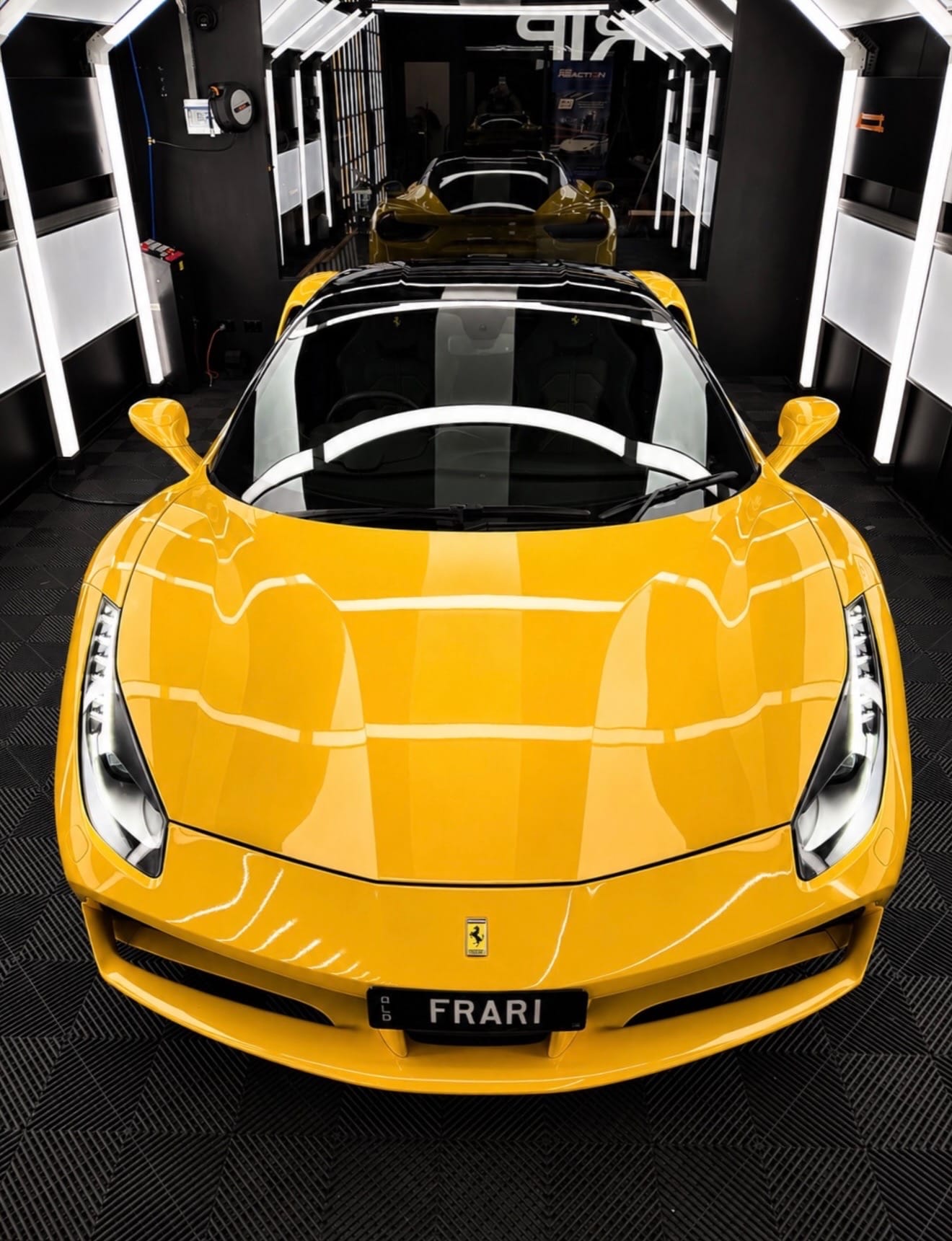
If you've just spent a Saturday morning waxing the car in a Helensvale driveway, only to see water stop beading a few weeks later, you've already found the main difference between wax and ceramic coating. Both make paint look glossy and help water run off. They just aren't built for the same timeframe, and the Gold Coast is hard on anything short-term.
Here's how the two compare in the conditions we actually see at our Southport studio. That means summer sun, salt air from the beachside suburbs, sand, storms, bats and bugs. We'll also be honest about when wax is still the right call.
The short answer
- Wax is a sacrificial layer that sits on top of the paint. It looks great when it's fresh, it's cheap and easy to apply yourself, and it wears away fairly quickly, so you keep reapplying it.
- Ceramic coating is applied to properly prepared paint and bonds to it, so it isn't just sitting on the surface. Our Drip 9H coating lasts 10 years with proper maintenance, far longer than wax or sealants.
- Neither one stops stone chips. For that you need paint protection film.
If you want a weekend hobby and a car that's mostly garaged, wax is fine. If you want protection that keeps working between washes, through a Gold Coast summer, without a reapplication routine, ceramic is the better tool.
What you're putting on the paint
Wax (carnauba, synthetic or a blend) is a soft layer you wipe on and buff off. It fills fine surface texture, which is why it gives that warm, wet look straight after application. It's also why it doesn't last: heat, rain, detergents and every wash wear it away bit by bit.
Ceramic coating is a liquid that's applied to clean, corrected paint and cures into a hard, glossy, hydrophobic layer. At DRIP we use Drip 9H, our own in-house-formulated coating. It's not a generic off-the-shelf product. Once it's on, water, mud and road grime bead off, and bird droppings, bug splatter and tree sap find it harder to etch the paint.
One point that trips people up: 9H is a pencil-hardness rating. It isn't a promise that the coating is scratch-proof or chip-proof. A coating makes paint easier to keep nice. It doesn't make it bulletproof.
How each one copes with a Gold Coast year
This is where the difference gets practical. Here's what each product is up against on a car that lives here.
Summer sun and hot panels
Dark paint parked in an open car park at Pacific Fair or on a street in Mermaid Beach gets seriously hot. Wax is soft, and heat is one of the things that wears it down fastest. Ceramic coating is designed for long-term exposure. It helps block the UV that causes oxidation and fading, which is a big part of why it suits a car that lives outside.
Salt air and beach trips
If you live in Main Beach, Burleigh or anywhere the sea breeze reaches the driveway, salt settles on the car between washes. A fresh coat of wax gives some barrier, but once it has worn thin the salt is sitting on clear coat again. A coated surface is slicker, so salt and grime rinse off more easily. The habit that matters most is the same either way: a freshwater rinse after the beach.
Sand and grit
Sand is abrasive. Neither wax nor ceramic will stop you scratching the paint if you wipe a sandy car with a dry towel. What a coating does give you is a surface that releases dirt more readily, so a proper pre-rinse lifts more grit off before your mitt ever touches it.
Storm season, droppings, bats and bugs
Summer storms leave mineral-heavy water spots, and bat and bird droppings are acidic. On bare or thinly waxed paint, a dropping left in the sun can mark the clear coat surprisingly quickly. Chemical resistance is one of the main reasons people choose ceramic. It buys you time to get the mess off before it etches. It doesn't mean you can leave it there for a week.
Washing every week (or not)
Every wash takes a little wax off, especially with stronger soaps. A coating is meant to be washed. Gentle hand washing with a pH-neutral shampoo is part of looking after it, not something that wears it away.
Side by side
| Car wax | Drip 9H ceramic coating | |
|---|---|---|
| How it sits on the paint | A soft layer on top | Applied to prepared paint and bonded to it |
| How long it lasts | Short term, reapplied regularly | 10 years with proper maintenance |
| Paint prep before application | Usually just a wash | Wash, decontamination and machine paint enhancement |
| Gloss | Warm, fresh gloss that fades as it wears | High gloss that's maintained by gentle washing |
| Water behaviour | Beads when fresh, then drops off | Strongly hydrophobic: water, mud and grime bead off |
| Resistance to droppings, bugs, sap | Limited, and less as it wears | Built to resist chemical etching |
| UV | Some, while it lasts | Helps block UV that causes oxidation and fading |
| Stone chips | No | No (that's PPF's job) |
| Who applies it | You, in the driveway | Applied in our Southport studio |
When wax still makes sense
Ceramic coating is what we do, but wax isn't useless and we won't pretend otherwise. It can be the right choice if:
- You enjoy it. Some owners love a Sunday wax as much as the drive. That's a perfectly good reason.
- The car is mostly garaged and only comes out on fine weekends.
- You're about to sell and just want it looking its best for photos and inspections.
- The paint is already tired and you're not ready to pay for the correction that should go under a coating.
What wax isn't great for is a daily driver that lives outside near the beach and gets washed when life allows. That car needs protection that's still working in month six, not just week one.
What about spray sealants and "ceramic" sprays?
Supermarket shelves are full of products with "ceramic" on the label. Some are decent spray sealants, and they're easy to use. But a spray-on product wiped onto unprepared paint isn't the same as a professional coating applied after decontamination and machine enhancement in a controlled studio. Treat them as a step up from wax, not a substitute for a coating. If you're comparing quotes, check the preparation, the named product and the surfaces included, not just the word "ceramic".
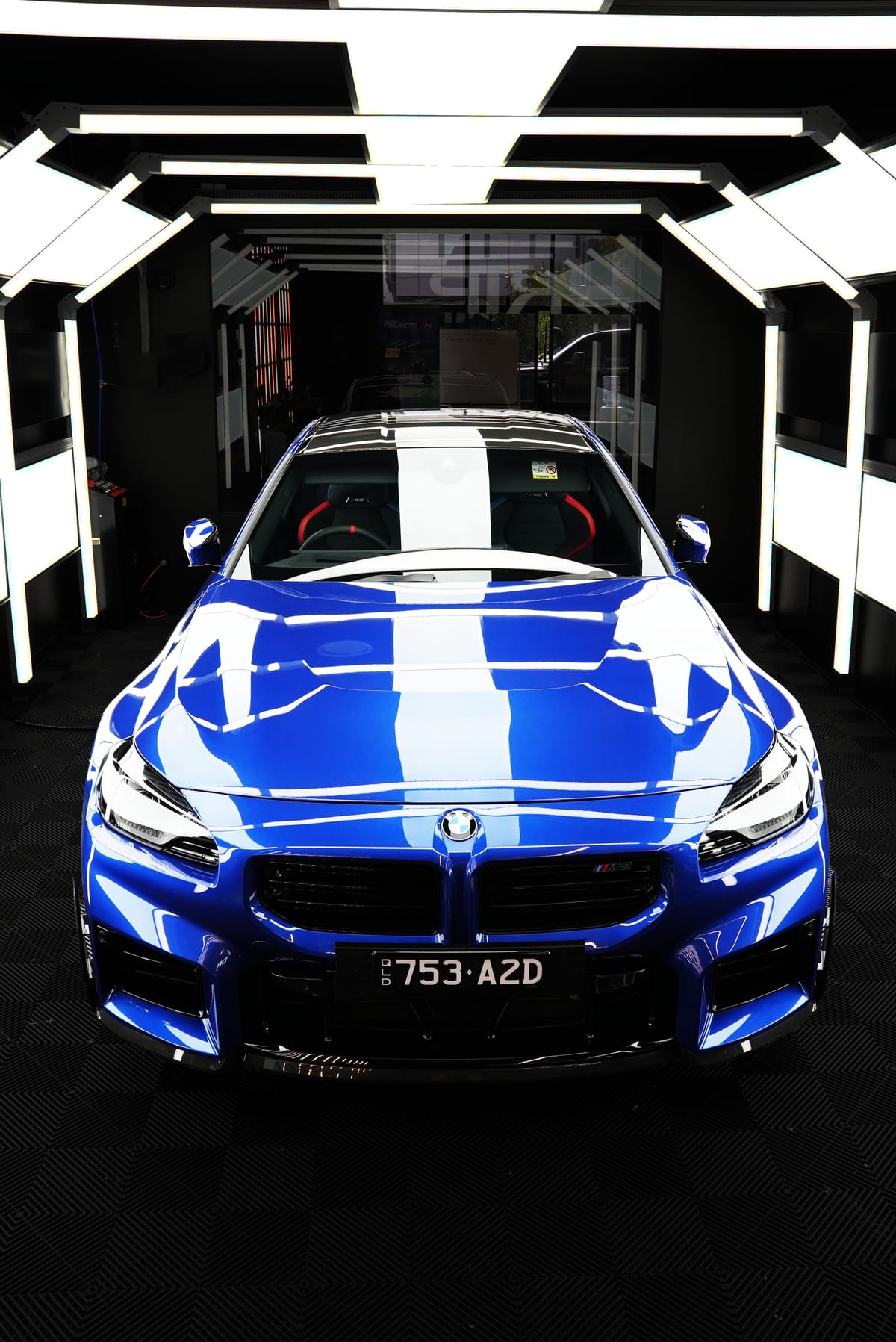
Going from wax to ceramic: what happens at the studio
If your car has been waxed for years, that's not a problem. It just means the paint gets prepared properly first. Our 10-Year Ceramic Coating follows the same steps every time:
- Wash and decontaminate. The car is washed and decontaminated so nothing bonded to the paint gets sealed under the coating.
- Machine paint enhancement. We machine the paint to bring back depth and clarity. Swirled or scratched paint needs more correction, which is why the price follows paint condition, not vehicle size. If swirls are your main concern, our paint correction price guide explains the options.
- Apply Drip 9H. It goes on in our Southport studio using a controlled, multi-stage application.
- Collect and ask about aftercare. We'll explain how to maintain the finish, because proper maintenance is what keeps a coating performing.
Most cars are in the studio for 1–3 days, depending mainly on how much paint preparation they need.
What it costs at DRIP
The 10-Year Ceramic Coating is priced by paint condition. Every vehicle size is the same price except a Large American Truck, which adds $110 inc GST.
| Paint condition | 10-Year Ceramic Coating (inc GST) |
|---|---|
| Brand new or lightly swirled | $1,320 |
| Heavily swirled | $1,430 |
| Heavily swirled and scratched | $1,485 |
November offer: the 10-Year Ceramic package is 50% off, extended into November. It includes the coating plus glass coating, wheel faces and interior protection, from $1,045 inc GST (valued at $2,090). Just picked up a new car? There's also the New Car Ceramic Coat with free window tint at a fixed $1,375 inc GST for every vehicle size. See new car protection for more.
If stone chips from the M1 are a worry too, the PPF vs ceramic comparison explains how film on the front and ceramic over the whole car work together.
Frequently asked questions
Is ceramic coating better than wax?
For a car that lives outside on the Gold Coast, usually yes. Wax is a short-term layer you keep reapplying. Our Drip 9H coating lasts 10 years with proper maintenance and resists bird droppings, bug splatter and UV between washes. Wax still suits owners who enjoy waxing or keep the car garaged.
Can I put wax on top of a ceramic coating?
There's usually no need, and some products can change how the coating behaves. Ask us at handover before you add any wax or topper to a coated car.
Do I need to remove old wax before ceramic coating?
You don't need to do anything at home. Every car is washed, decontaminated and machine enhanced in our studio before Drip 9H goes on, so the coating goes onto clean, prepared paint.
Will wax or ceramic coating stop stone chips?
No. Neither wax nor ceramic coating is impact protection. 9H is a pencil-hardness rating, not a promise against chips or deep scratches. For stone chips, choose paint protection film.
How do I look after a ceramic coating compared with wax?
Instead of reapplying wax, you wash gently by hand with a pH-neutral car shampoo, use the two-bucket method, avoid automatic brush car washes, and rinse off salt, bird droppings and bug splatter promptly.
How much does ceramic coating cost compared with doing wax myself?
Wax is cheaper up front, but you keep buying it and spending weekends applying it. Our 10-Year Ceramic Coating starts from $1,320 inc GST, and the 10-Year Ceramic package is currently 50% off, from $1,045 inc GST (valued at $2,090), extended into November.
Ready to stop re-waxing?
Get an instant estimate with our instant ceramic coating quote, or call 0439 053 998. Our studio is at 68 Davenport Street, Southport, open Monday to Friday, 8am–5pm. November offer: the 10-Year Ceramic package is from $1,045 inc GST (valued at $2,090), extended into November.
Related: How long ceramic coating lasts · Why Gold Coast cars need ceramic coating · Premium detailing · Ceramic coating in Broadbeach · Ceramic coating in Surfers Paradise